Watch the layered Mario and Yoshi scene come to life
This short video shows the real depth between the handmade cardstock layers and the finished frame from changing angles.
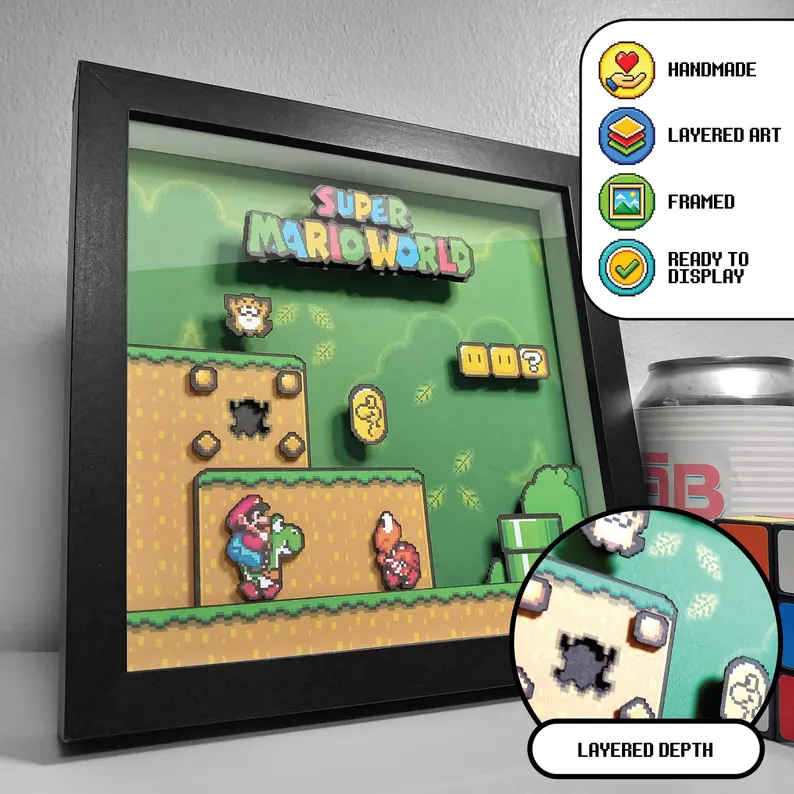
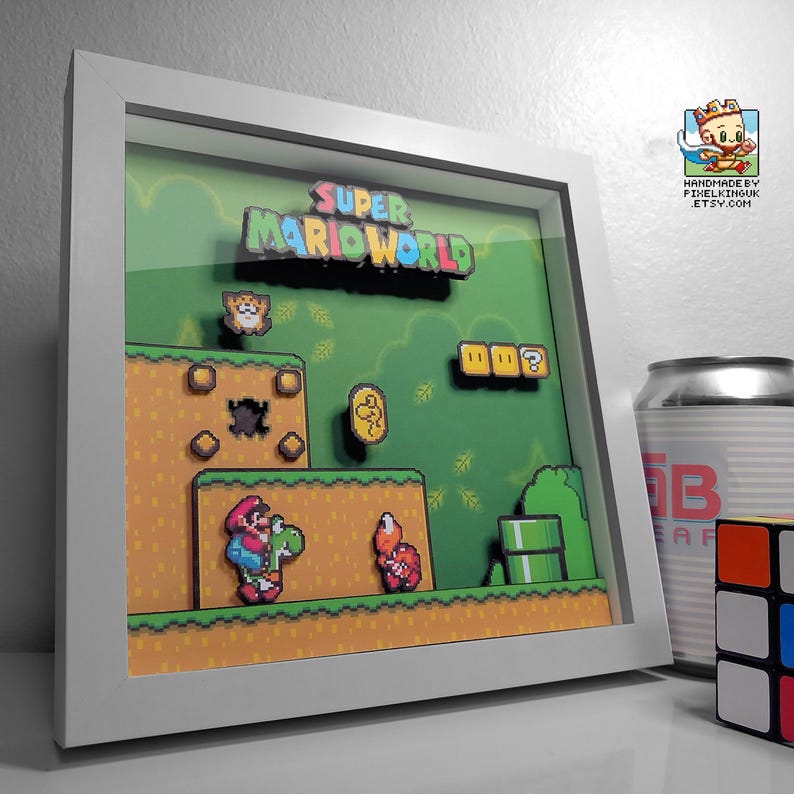
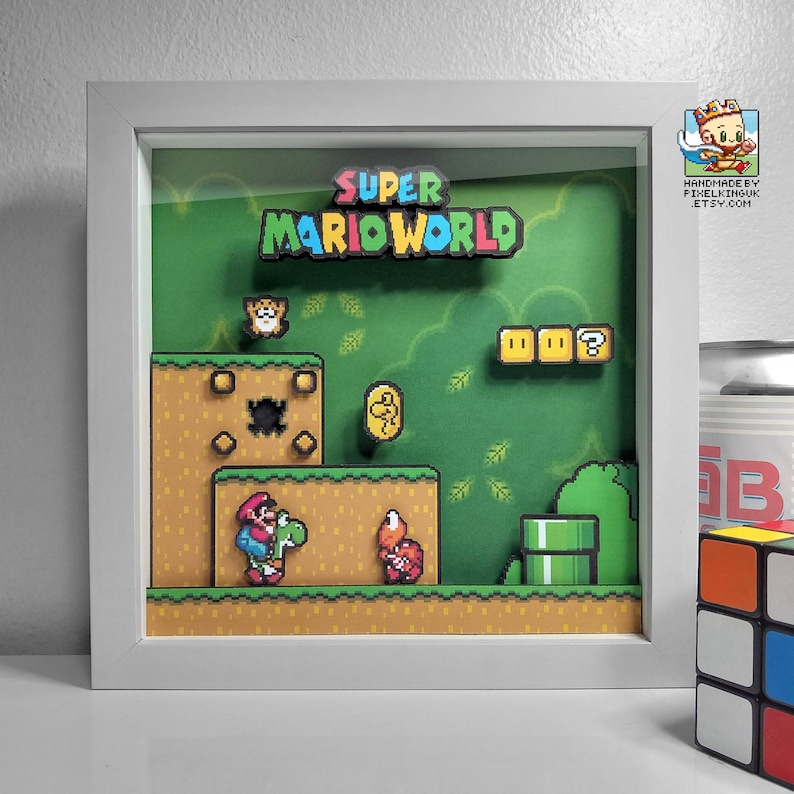
This Super Mario World shadow box recreates a scene inspired by Yoshi’s Island 2, the early Dinosaur Land level where Mario first releases Yoshi from an egg. It is a particularly memorable choice for layered art because the stage introduces an important character while using the bright, readable scenery that defines the opening of the game.
Why Yoshi’s Island 2 is an iconic Super Mario World scene
Yoshi’s Island 2 is the second level in the opening Yoshi’s Island area. Its most important moment is not a boss or a dramatic cutscene; it is the discovery of Yoshi. After Mario frees him, the two characters immediately change how the player moves through the level. Yoshi can eat enemies, extend Mario’s reach and turn a familiar platforming rhythm into something new.
Visually, the stage makes that introduction easy to remember. Rounded green hills, blue sky, pipes, blocks and small enemies create a cheerful frame around Mario and Yoshi. The characters occupy the strongest colour contrast, so the eye goes to their partnership first even when the scene contains several recognisable game elements.
Building the scene in separate layers
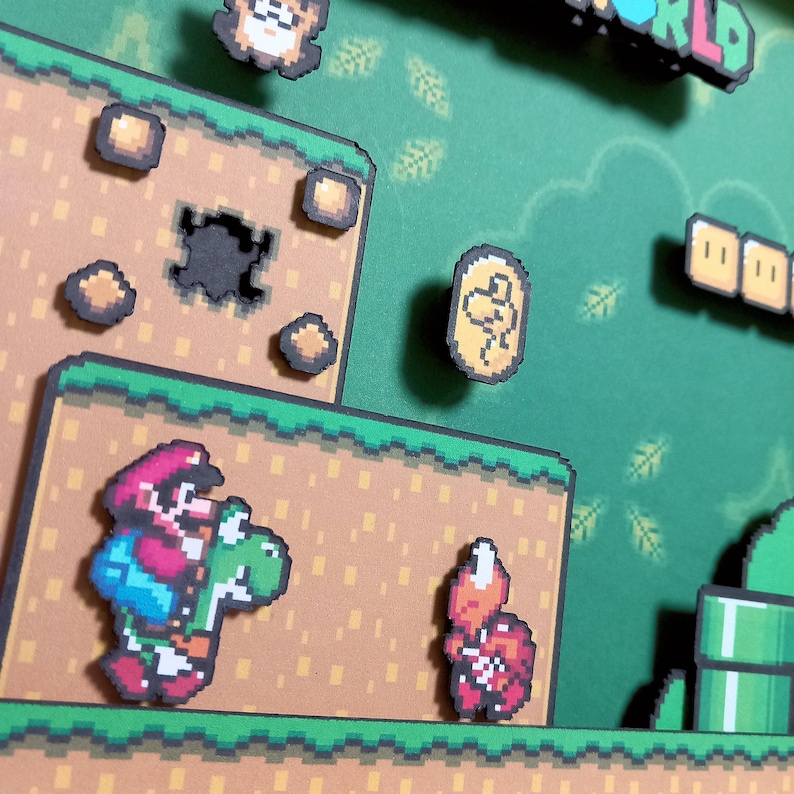
The original screen already suggests depth, but the SNES displays it on a flat plane. In the shadow box, the landscape is separated into physical levels. Sky and distant terrain form the backing layer. Platforms, pipes and bushes sit farther forward. Mario, Yoshi and selected foreground details occupy the layers nearest the glass.
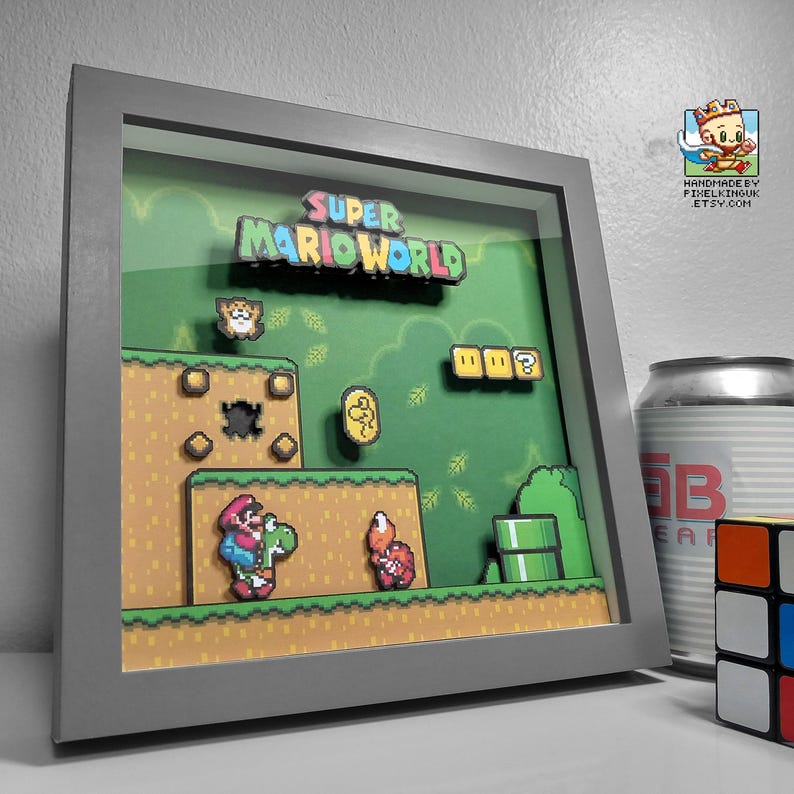
Small spaces between those elements cast real shadows and make the playable route stand away from the scenery. The effect is subtle from directly in front and more pronounced from an angle. That changing view is the main difference between a layered frame and a single printed image.
The details that define the Yoshi’s Island 2 artwork
- Mario and Yoshi as the focal point: the pair sit at the visual centre because their first meeting is the reason this level matters.
- A bright opening-world palette: greens and blues preserve the welcoming tone of Dinosaur Land’s first area.
- Recognisable stage geometry: pipes, ground tiles and layered hills establish the game immediately without crowding the composition.
- Crisp sprite silhouettes: careful cutting keeps the stepped pixel edges visible and the characters readable.
From a 16-bit level to an 8-inch display
The compact square frame suits the proportions of a game screen while giving the layers enough room to breathe. At roughly 8 × 8 inches, it can sit on a shelf or desk as well as form part of a game-room wall. The scene carries nostalgic value for players who remember discovering Yoshi, but its strong colour and geometric construction also work as a small piece of graphic art.
For the broader making process, see the guide to Super Mario World pixel art shadow boxes. If you are interested in why the source imagery remains so effective, the visual essay on Super Mario World’s enduring 16-bit art examines its colour, animation and level design in more detail.
Yoshi’s Island 2 shadow-box questions
Is this the level where Mario first meets Yoshi?
Yes. Yoshi’s Island 2 is the early Super Mario World level in which Mario releases Yoshi from an egg and can ride him for the first time.
How does the 3D effect work?
The image is divided into separately cut planes and assembled with space between them. Light falling across those gaps creates genuine shadows and visible depth.
Where can I see current availability?
Visit the PixelKingUK Etsy shop for current designs, ordering details and availability. More scene-led making features are collected in Pixel Art & Craft.