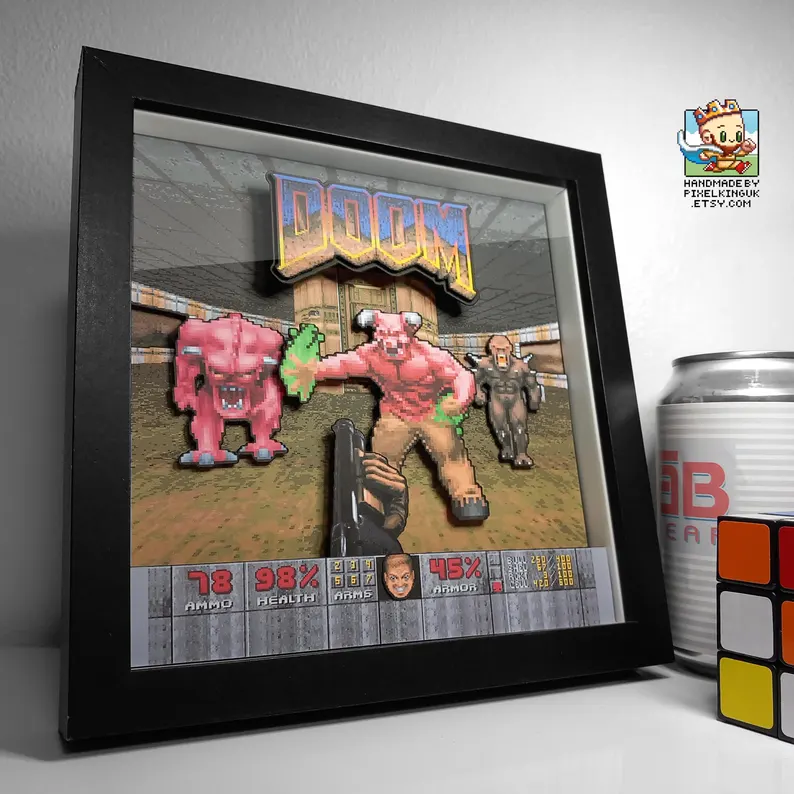
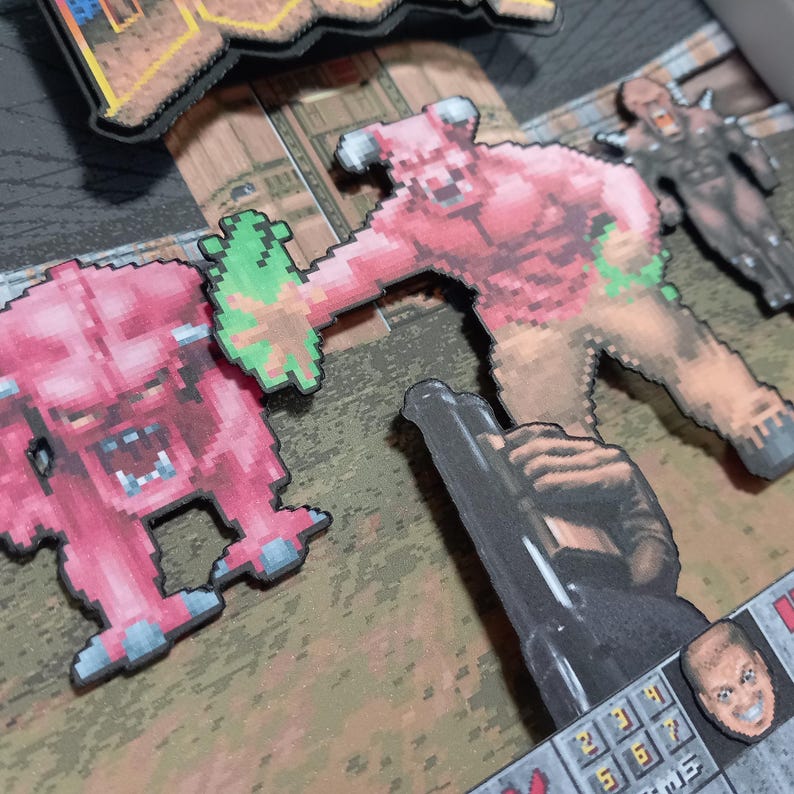
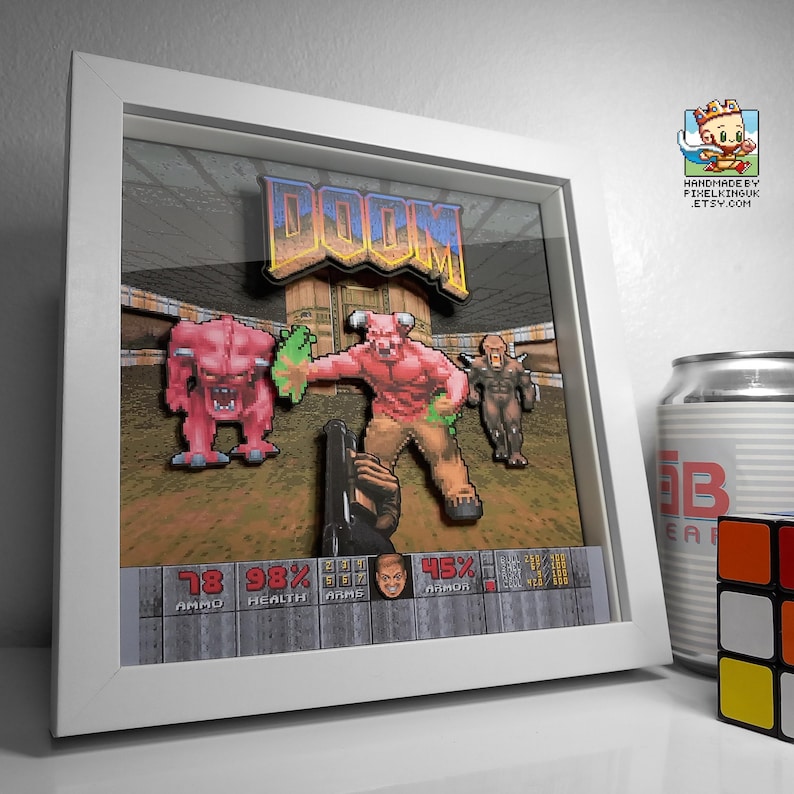
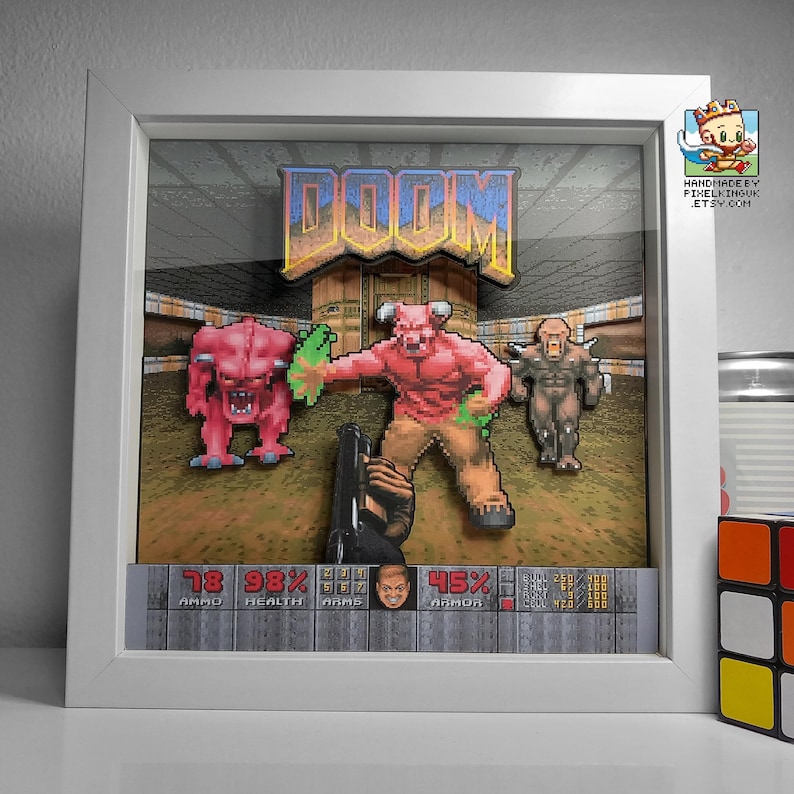
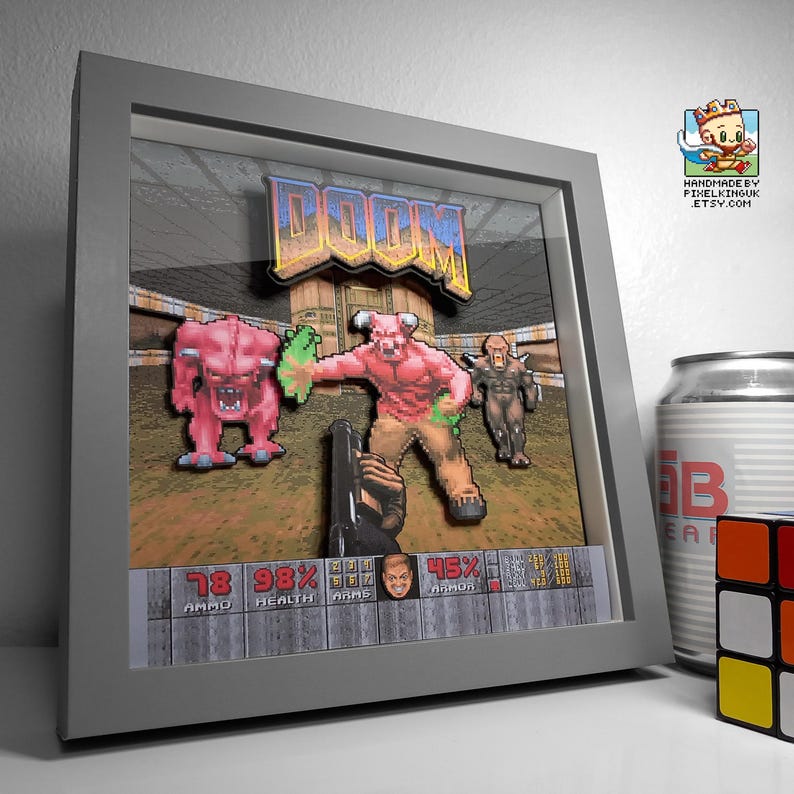
A Doom pixel art shadow box translates the claustrophobic corridors and demon sprites of the 1993 PC classic into real physical layers. The result is not a flat screenshot in a deep frame: background architecture, enemies, the weapon view and interface-inspired details are separated to create genuine spacing and shadow.
See the Doom shadow box in motion
This short product video shows the real spacing between the demons, first-person weapon view, scenery and HUD as the finished frame moves.
Why classic Doom is ideal for layered artwork
Doom builds its viewpoint from distinct visual systems. Walls and floors create the environment, enemies occupy the middle distance, the weapon sits prominently in the foreground and the status display anchors the bottom of the screen. Those planes already imply depth, so they adapt naturally to a shadow-box composition.
The game’s artwork is also immediately recognisable. Brown industrial textures, pools of toxic colour, glowing red highlights and bulky demon silhouettes create a specific atmosphere even outside the moving game. A successful frame preserves that tension between a dark environment and the bright visual signals that guide the player.
Planning the Doom scene
Choosing a readable encounter
A good scene needs one obvious focal point. Too many demons or overlapping textures can turn a compact frame into visual noise. The strongest composition gives the principal enemy a clear silhouette and uses the corridor lines to pull the eye towards it.
Keeping the first-person viewpoint
The foreground weapon is essential because it makes the viewer occupy the player’s position. Placing it on an upper layer strengthens that illusion, while enemies sit deeper in the frame and architecture recedes behind them.
Balancing darkness and detail
Dark areas must retain enough separation to show their cut edges. Subtle changes in value distinguish a wall from a demon or doorway, and brighter effects can be used sparingly to stop the scene becoming muddy.
How the 3D Doom shadow box is assembled
The artwork is prepared as a set of visual planes. The deepest sheet carries the remote corridor or room. Architectural details and distant enemies come forward in stages. The nearest enemy, weapon and selected foreground elements sit closest to the glass.
Each component is cut around its pixel outline and aligned against the complete reference scene. Spacers maintain consistent gaps between the layers. Those gaps cast natural shadows, especially around large enemy silhouettes and the weapon, making the composition change as the viewer moves past it.
What the frame reveals about Doom’s art
Separating the screen shows how carefully the original game controls attention. Enemies often use warmer or brighter tones than the walls around them. Door frames and floor lines funnel the eye through space. The central weapon establishes scale, while the face and status information make the interface part of the game’s personality.
Although the environment appears three-dimensional, much of its character comes from two-dimensional sprites and textures. A physical layered version makes that construction visible: flat pieces cooperate to produce a convincing world, first on a monitor and then inside the frame.
Choosing a frame colour and display location
Black emphasises the dark horror atmosphere, while white or grey can separate the artwork from a darker wall or gaming setup. The product photographs show how the same scene changes across frame colours. On a shelf, desk or game-room wall, leave enough light to reveal the internal shadows without placing the print in harsh direct sunlight. For help planning the wider display, see these gaming wall art ideas for a grown-up games room.
Doom shadow-box questions
Is the 3D effect printed?
No. The depth comes from separately cut and spaced artwork inside a deep frame.
Can I choose the frame colour?
The photographs show black, white and grey presentations. Check the current listing for available options before ordering.
Where can I see the current Doom design?
View current specifications and availability on the Doom layered pixel art listing on Etsy. You can also explore related making features in Pixel Art & Craft or compare the darker 16-bit aesthetic with the Splatterhouse 2 visual analysis.