My Splatterhouse Biggy Man shadow box starts with a game that never tried to make its horror subtle. The original arcade game filled the screen with gloomy scenery, oversized enemies and scenes that looked more like a video nasty than the colourful platform games around it. That blunt visual style is exactly what made the Stage III fight with Biggy Man work so well as layered artwork.
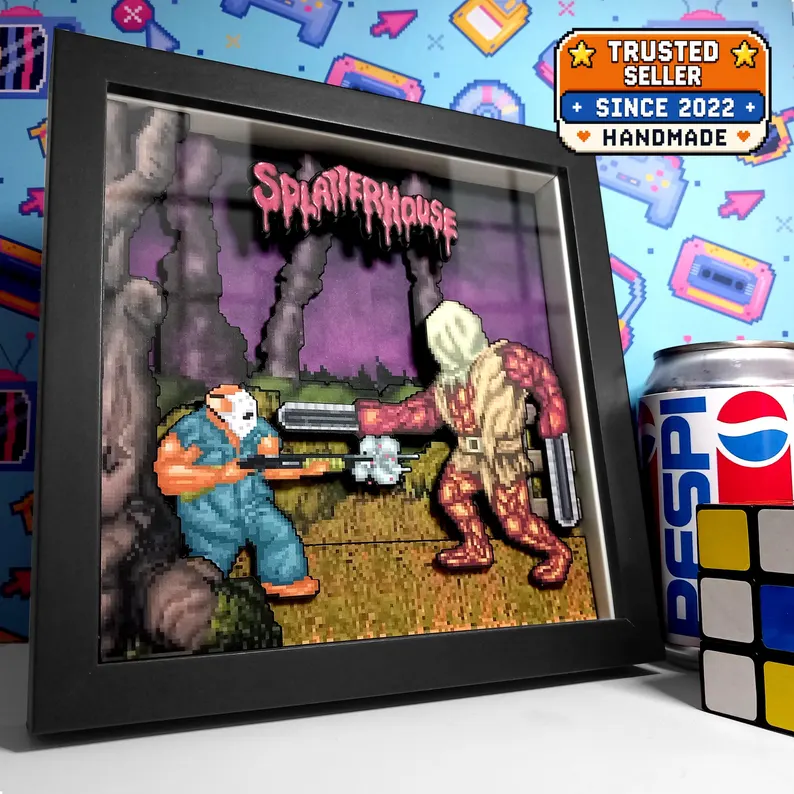
This scene shows Rick Taylor aiming his shotgun at Biggy Man, the huge boss with a chainsaw in each arm. The purple sky and twisted trees sit behind them, giving the fight a strange, grim atmosphere before the two main characters are brought forward in separate layers.
The masked character on the left is Rick Taylor, the Splatterhouse hero. Keeping his smaller figure clearly readable beside Biggy Man was essential to making the scene work.
Turning the Biggy Man fight into physical layers
The original scene already has a strong left-to-right composition. Rick occupies one side with the shotgun, while Biggy Man fills the other with a much larger silhouette. That difference in scale helps the boss feel threatening and gives the frame a clear focal point.
I separated the purple forest, ground, game logo, Rick, shotgun and Biggy Man into individual sections. Each piece is printed onto cardstock, precision cut and assembled with controlled spacing inside the frame. Real shadows fall between those layers, so the boss battle gains depth without losing the hard pixel edges of the original game graphics.
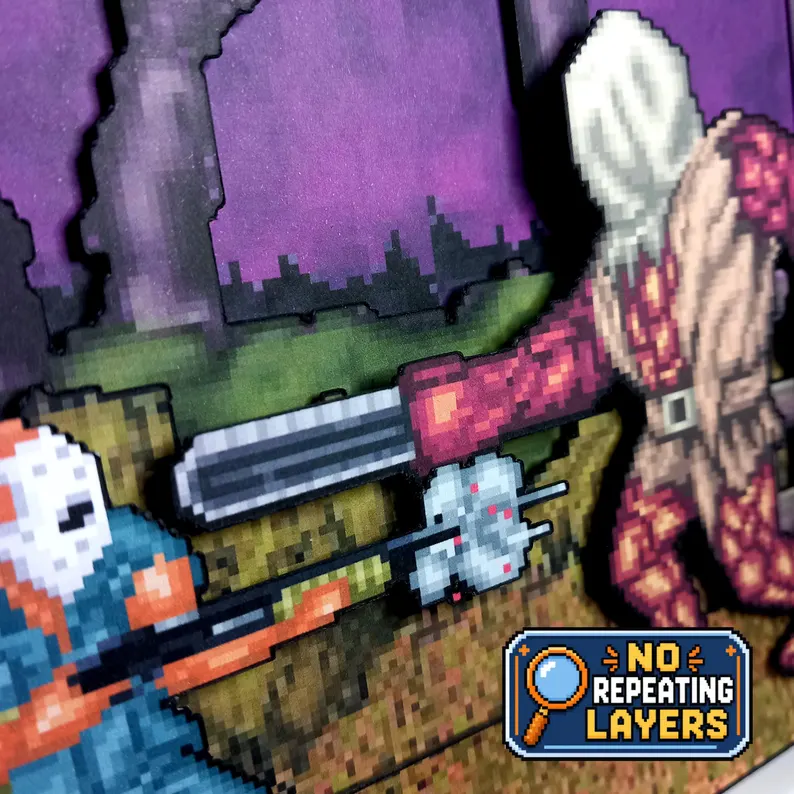
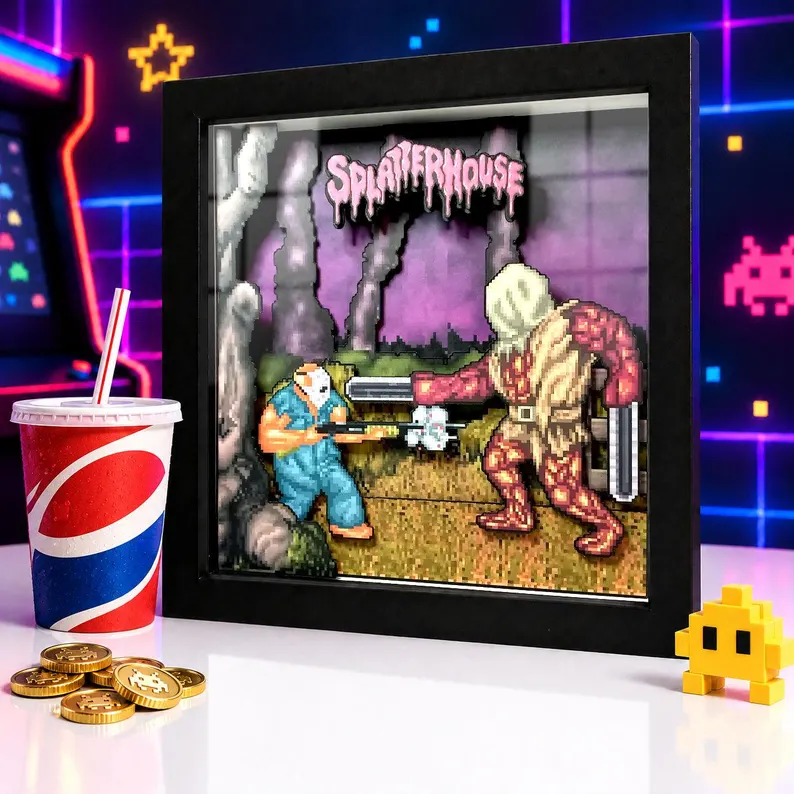
The close-up images show how the construction works. Biggy Man’s two chainsaw arms sit forward from the forest, while Rick and the shotgun form another clear layer on the opposite side. An angled photograph with the glass removed makes the physical gaps easier to see. This is handmade layered video game art rather than a flat print placed inside a deep frame.
Retro horror game art with a specific identity
Splatterhouse wall art is naturally suited to a horror-themed games room, but I wanted the design to remain specific to the game. The purple forest, Rick’s pose and the shape of Biggy Man are more important than adding generic blood, skulls or Halloween lettering around them.
That makes the finished piece useful as Halloween gaming decor without limiting it to one month of the year. It looks at home beside arcade cabinets, retro consoles, horror game collections and PC Engine or TurboGrafx displays. Fans who discovered Splatterhouse through different releases can still recognise the scene as part of the series’ early visual identity.
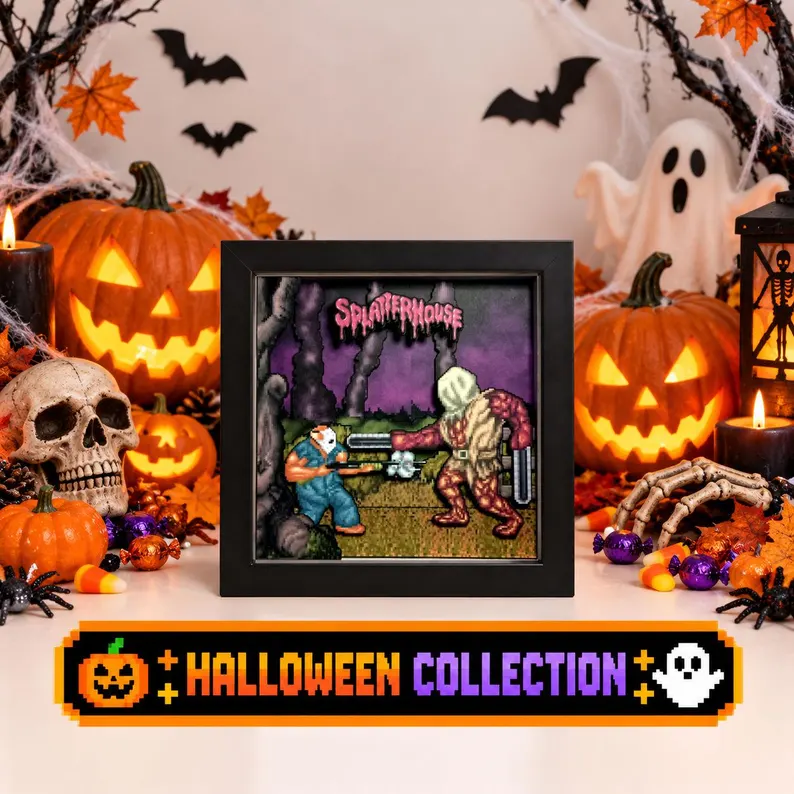
The Halloween gallery photograph places the frame beside pumpkins and seasonal decorations, while the arcade-room image shows how it works as permanent retro gaming decor. Black gives the artwork its darkest finish, but white and grey frame options are also available in the live listing.
For broader display ideas, see my guide to gaming wall art for a grown-up games room.
A Splatterhouse gift for a retro horror fan
This is not a generic gamer present. It is aimed at somebody who remembers Splatterhouse, collects unusual arcade artwork or enjoys the darker side of 1980s and early console gaming. That makes it a distinctive birthday, Christmas or Halloween gift for a retro horror game fan.
Each Splatterhouse Biggy Man shadow box is made after the order is placed. I cut, assemble and frame the cardstock layers in my retro home workshop. The finished piece has a removable glass front and can be ordered in several sizes with a black, white or grey frame.
The live Etsy listing shows the current production time, delivery estimate and complete size guide. Gift messages are welcome. Check delivery availability and the charges that apply to your destination before ordering.
If you need the frame for a specific date, my personalised gaming gift guide explains what to check before ordering handmade artwork.
Why the boss scene works in a frame
Biggy Man is visually heavy, which could easily overwhelm a square composition. Keeping Rick and the shotgun clearly separated on the opposite side gives the scene balance. The logo above them identifies the game without covering the action, while the trees create enough detail in the background to make the empty space feel deliberate.
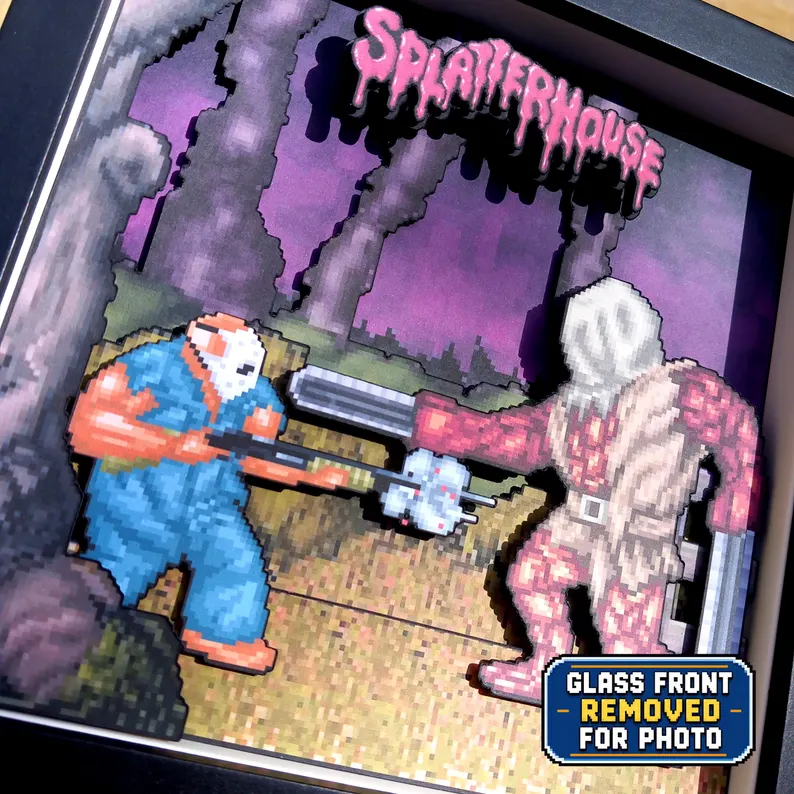
From the front, the finished frame reads like a complete Splatterhouse boss screen. Move to the side and the forest, characters and logo break apart into visible depth planes. That change with the viewing angle is the main reason I make these scenes as shadow boxes rather than prints.
The result is a piece of handmade retro horror game art that keeps the original pixel graphics at its centre. Rick facing Biggy Man is the scene, and the layers simply give it a physical presence on the wall.
You can view the complete photographs, compare frame colours and sizes, and check the current delivery estimate on Etsy.
You can also browse more making articles in Pixel Art & Craft.
For a different take on darker game imagery, see my classic DOOM shadow box. If you are choosing a present rather than building a horror collection, the Christmas gifts for gamers guide helps match the game to the person.
Splatterhouse Biggy Man shadow box FAQs
Which scene is shown?
The design recreates Rick Taylor facing Biggy Man in the Stage III fight from the original Splatterhouse arcade game. The purple forest, shotgun and chainsaw-armed boss give this particular scene its identity.
Is this a flat print or a layered piece?
It is a layered piece. Printed cardstock sections are cut and spaced apart inside the frame, creating physical shadows between the background, logo and characters.
Is it suitable as a gift for any gamer?
It is best chosen for an existing Splatterhouse or retro-horror fan. The graphic imagery is a deliberate part of the game’s appeal, so check that it suits the recipient and the space where they will display it.