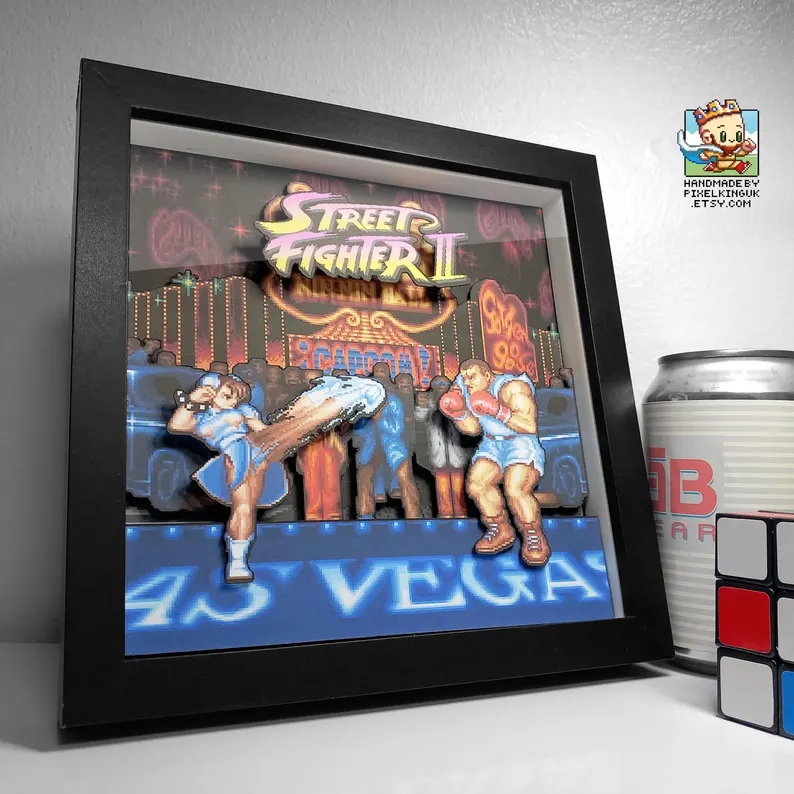
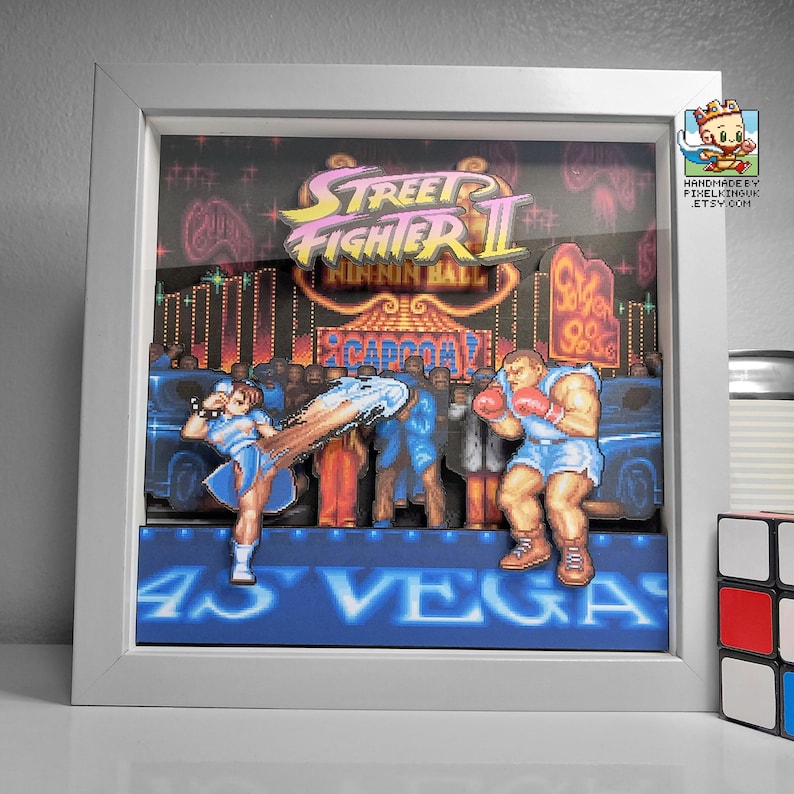
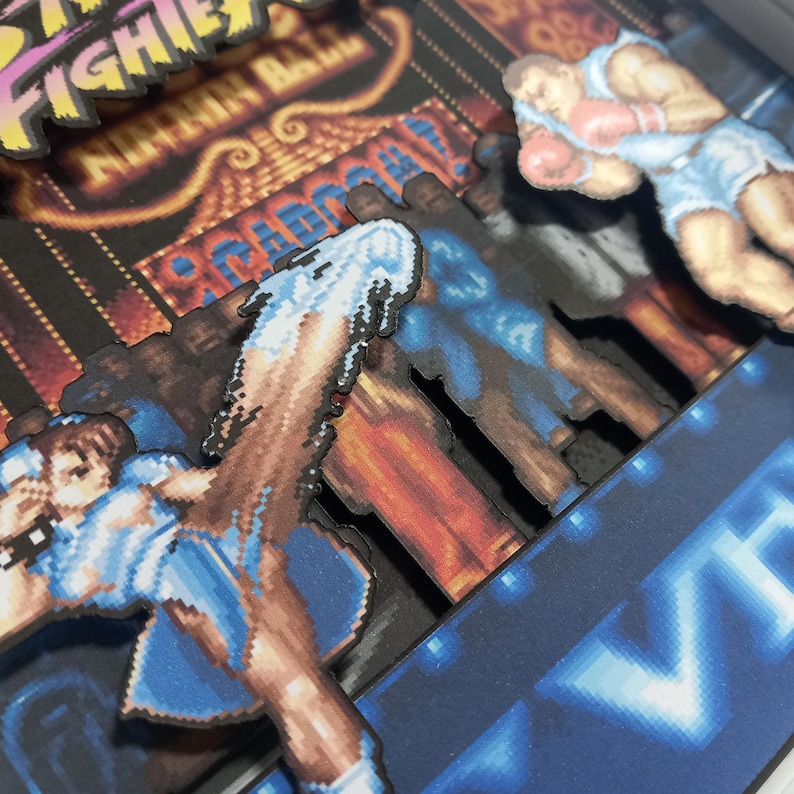
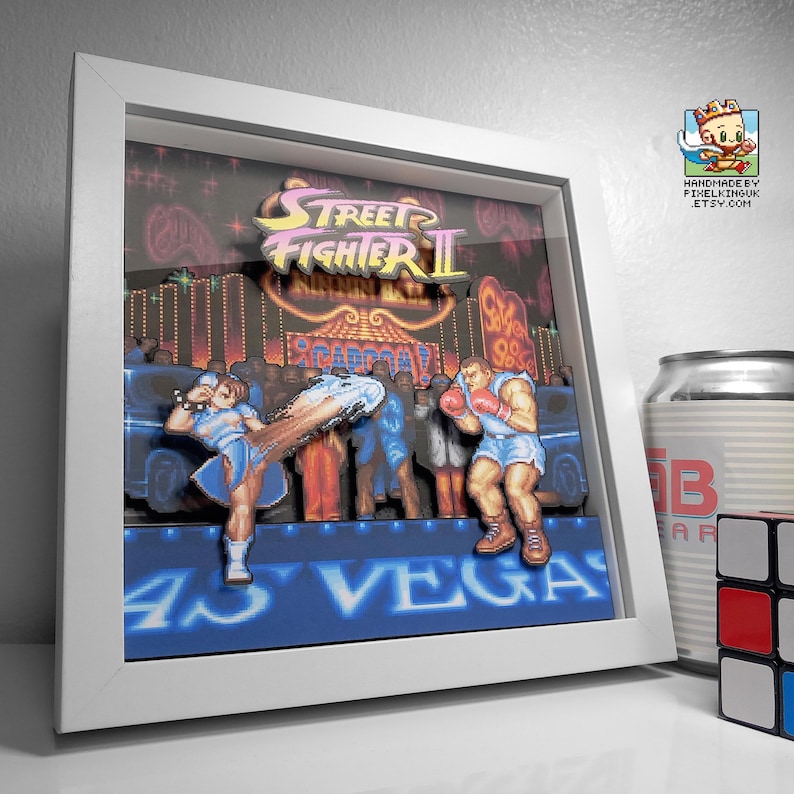
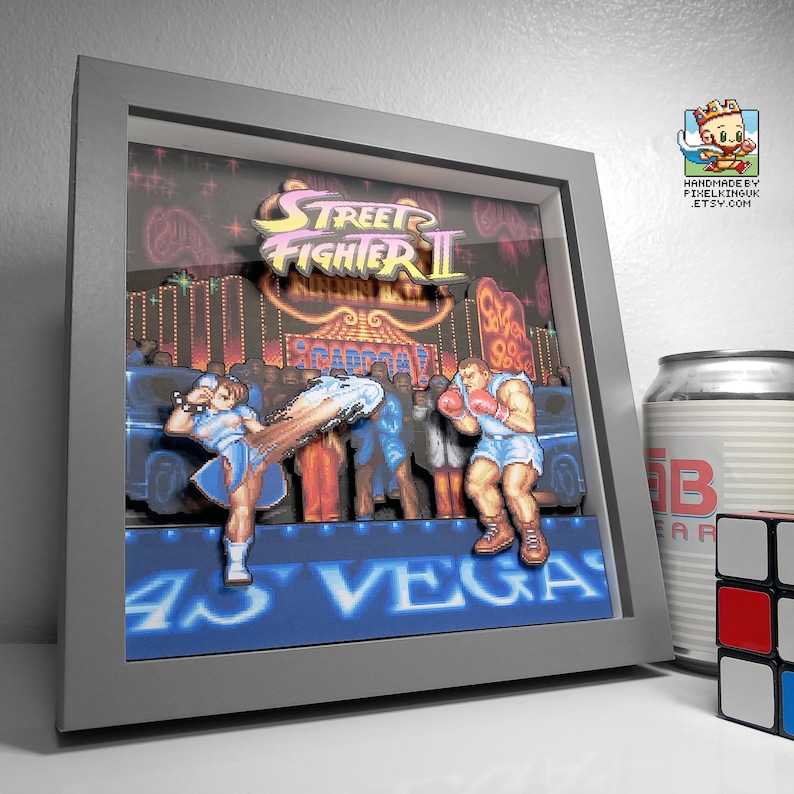
This Chun-Li vs Balrog pixel art shadow box captures the visual tension of a classic Street Fighter match. The two fighters, stage scenery and interface details are separated into physical planes, giving a familiar 16-bit confrontation genuine depth while preserving the clarity of the original sprites.
Why Chun-Li and Balrog make a striking matchup
Chun-Li and Balrog communicate two very different fighting styles through shape alone. Chun-Li’s upright stance, distinctive hair buns and rapid kicking poses suggest precision and movement. Balrog’s gloves, broad shoulders and forward-leaning guard make him appear heavy, compact and direct.
That contrast creates a readable scene before either character moves. One silhouette is defined by reach and agility; the other by mass and punching power. Their costumes also separate cleanly through colour, which helps both sprites remain distinct against a detailed stage.
How Street Fighter II made combat readable
Competitive fighting games demand immediate visual information. A player needs to recognise distance, attack direction, recovery and impact in fractions of a second. Street Fighter’s artists exaggerated key poses so a crouch, jump, kick or punch could be understood from silhouette and timing.
Animation frames often prioritise the action over realistic anatomy. Limbs extend, bodies compress and clothing snaps in the direction of movement. Brief hit effects mark contact without hiding the fighters. The result feels expressive in a still image and precise during play.
Stage art frames the duel
Street Fighter stages are more than backgrounds. Architecture, spectators, signs and repeated horizontal lines establish place while keeping the centre of the arena clear. Brighter fighters stand against broader environmental colours, and the floor provides a stable baseline for judging distance.
In a framed scene, the stage gives context without stealing focus. Rear scenery can sit deepest, architectural or crowd details move into the middle distance, and the playable floor leads forward to the characters.
Building the layered Chun-Li vs Balrog artwork
The composition is divided into background, stage, fighter and foreground/interface planes. Chun-Li and Balrog are cut around their stepped sprite outlines and positioned far enough apart for both stances to remain readable. Consistent spacers then produce real shadows between the visual levels.
Alignment is especially important in a fighting-game scene. Feet must meet the same ground plane, health-bar elements need to remain level, and the spacing cannot change the perceived distance between opponents. When those relationships are preserved, the frame feels like a paused match rather than a collage.
Why arcade fighting art works on display
A versus scene has an immediate composition: two opposing figures, a central space charged with possible movement and a stage that frames the conflict. It can be understood from across a room, while sprite edges, facial details and layered shadows reward closer inspection.
The subject also represents a key part of gaming’s visual culture. Character selection, signature poses and location-specific stages helped make fighters recognisable beyond the arcade cabinet. For another Capcom-era analysis of strong silhouettes and animated impact, read Cadillacs and Dinosaurs pixel art.
Street Fighter shadow-box questions
Is the artwork genuinely layered?
Yes. The fighters and scene elements are separately cut, spaced and assembled inside a deep frame.
Where can I see the current version?
View current photographs, options and availability on the Chun-Li vs Balrog shadow box Etsy listing. More handmade fighting-game artwork appears in Pixel Art & Craft.